
NOIR + BLUES = GIGS

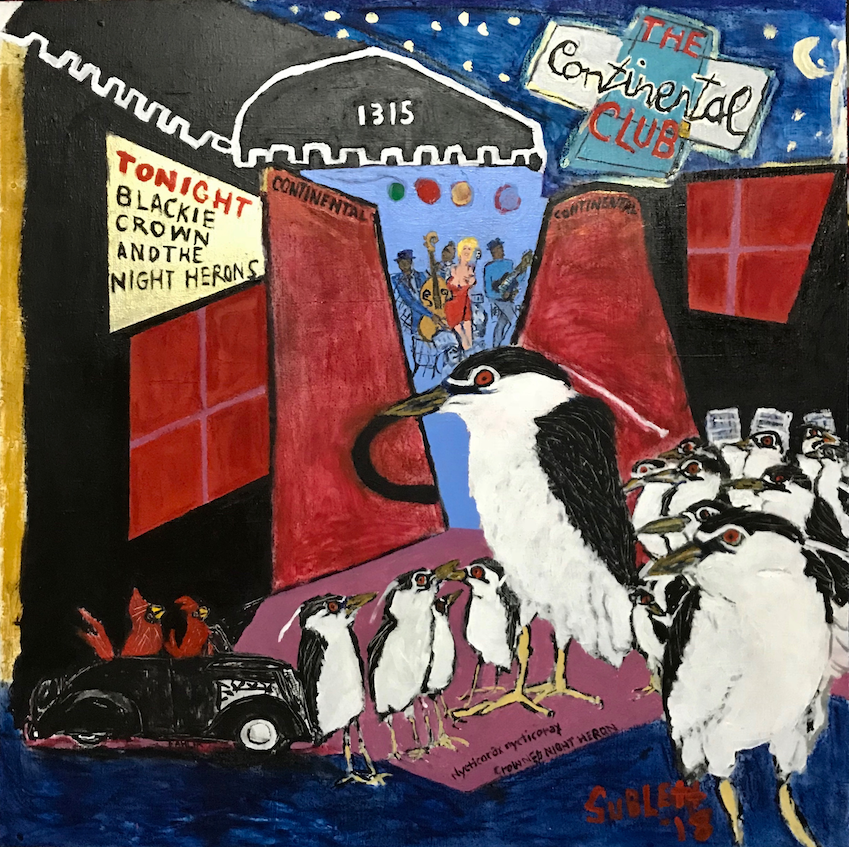
My 4th Annual Howlin Wolf Birthday Tribute is Sat. June 9, Continental Club. The bands will be rocking! My Terrible Self + Denny Freeman, Eve Monsees, Sonny James & Mark Evans will be joined by Big Foot Chester & a dozen super special guests. See the poster for the full roster. All Howlin Wolf, All night, celebrating the 102nd year since the birth of the greatest American blues singer of them all.

7 PM, Weds. June 5, I’ll be playing a short set to welcome my good friend, Ace Atkins, to BookPeople. A stunningly talented author, Ace has taken over Robert B. Parker’s Spenser series since the death of that great man, and he also has a new Nick Travers novel out. He’ll be talking about and signing both, Lullaby (Spenser) and The Lost Ones (Nick Travers). For details check the BookPeople site.

7 PM Thurs. June 6, NOIR AT THE BAR at Opal Devine’s. What is Noir at the Bar? OK, it’s like this: Hardboiled crime fiction in a place where people go to drink booze at night. Simple version. Started in Philadelphia a couple years ago. Cool. OK, I’ll be playing and reading with other great authors. Come check out new crime fiction from Peter Farris, Jonathan Woods, and Barry Graham. Also, singer/songwriter Chris Hoyt. Books will be available for defacing by dese authors, and thanks to Scott Montgomery at BookPeople for setting this up.

Remember: You can always find a hardbound copy of my true crime and music memoir, NEVER THE SAME AGAIN at BookPeople. My Martin Fender crime novels Rock Critic Murders and Tough Baby are now available on the Amazon Kindle site. Rock Critic Murders is available for your iPad in an enhanced version with lots of music, video and pictures, supercool, go to the iBookstore and check it out now.
The THIRD Martin Fender Novel, Boiled in Concrete, will be available as an eBook in late June or July. Other works are coming soon. Keep rocking!!

Leave a Comment

Filed under Books & other writing by Jesse Sublett, JESSE'S GIGS, NOIR & TRUE CRIME

GOP Clown Club: Craig James

Craig James' web site says he is the "Deb Fischer of the Texas Senate Race." I didn't find the evidence all that compelling, so I helped redesign their graphics.


The Clown-of-the-Day Club that is the modern GOP has a hard time topping its most outrageous lies and idiotic ploys. It’s hard to look anywhere–billboard, newspaper, online, TV–without seeing a new eruption of brainless, heartless, gutless bravado. Here’s the first one that caught my eye this morning, thanks to Politifact:

Craig James, Conservative GOP candidate for Texas Senate, claims that: “Barack Obama and Hillary Clinton are negotiating with the United Nations about doing a treaty that will ban the use of firearms.”

FALSE! is the rating from Politifact, as in totally, absolutely, “liar, liar, pants on fire.” For more nuggets of non-reality-based nonsense, check Politifact’s Craig James page. But before you hit the link, make sure you are holding your digital device with fireproof gloves.

Where do they get this crap? From what dark, dank holes do these cretins crawl and slither? Craig James‘ website trumpets this: “Craig James is the Deb Fischer of the Texas Senate Race.” Deb Fischer is the right wing wacko who just won in Nebraska.

Next fall Fischer will face Democrat Bob Kerry, the Vietnam war vet and former presidential candidate, to replace conservative Democrat Sen. Ben Nelson, who is retiring. Who loves Fischer? Sarah Palin, that’s who. Hoo-boy. ‘Nuff said.

By the way, you’ll notice that Craig James’ official website photo has the Austin skyline at his back. That’s Austin, as in the liberal blue oasis in redneck red state Texas. How many of those people down there in those buildings, hiking and biking and sailing on Lady Bird Lake will vote for this tin-foil-hat mannequin? Maybe just enough to paddle his canoe down that river of hatred and stupefying idiocy that is the modern-day Republican Taliban.

Leave a Comment

Filed under politics

UPDATE TO A K A SERIAL KILLER

The State of Texas did the right thing. After what felt like ten years grief, flashbacks, frustration (but was only a few months; not that the flashbacks and nightmares have ever completely stopped), I received the call from Victim Services on Friday: Parole denied for Lyle Richard Brummett, serial killer. He will be incarcerated at least until 2014, when he will be up for review again. It’s a long story, not a pleasant one. Instead of repeating it here, I am reposting the original post from a couple of weeks ago, and also, the update in today’s (5.21.12) Austin Statesman. You can read it below, or here.

Parole denied for man convicted of 1970s murders in Austin, Kerrville

A man convicted of killing women in Austin and Kerrville in the 1970s has been denied parole a month after state officials sent his victims’ family members letters with conflicting statements about whether or not he would be released.

Lyle Richard Brummett, who is serving two life sentences for murders he committed in 1975 and 1976, will not be eligible for parole again until 2014, officials with the Texas Board of Pardons and Paroles said Monday. A board panel reached its decision Friday, a week after interviewing several people who knew or were related to the women Brummett killed.

The news came as a relief to Jesse Sublett, an Austin musician and author who was dating 22-year-old Dianne Roberts when she was killed by Brummett in August 1976.

“It’s absolutely, absolutely good news,” Sublett said Monday of the board’s decision. “Considering how we went from him being released to him being kept in, we’ll take it.”

In March, Sublett and others received letters from the Texas Department of Criminal Justice. One letter said that Brummett would be paroled, but the last said the Texas Board of Pardons and Paroles had flagged Brummett for “special review.”

A spokeswoman for the board said a panel interviewed Brummett and voted to release him into treatment but then realized he did not qualify for it.

“They apologized for their errors the first time,” said Sublett, who traveled to Angleton, which is south of Houston, on May 11 to make the case that Brummett should not be released. Sublett said he was joined by Roberts’ father and the brother of Beth Pearson, who was killed in Kerrville by Brummett in 1975.

Sublett found Roberts dead in the apartment they shared in South Austin. When police apprehended Brummett, he told them that he had killed two other young women in Kerrville — Pearson and 18-year-old Carol Ann London. Brummett was eventually convicted of killing Roberts and London. He has been in prison for decades, and while he has come up for parole before, he has always been denied.

When Sublett learned that Brummett may be released, he said he became extremely fearful that the convicted killer — now 55 — could hurt someone else.

“I’d like (Brummett) to stay in prison for the rest of his life,” Sublett said. “If not, I’d really like him to stay there another 10 or 20 years, until he’s old and slow when he gets out.”

Contact Patrick George at 445-3548

Thanks to all of you who wrote letters protesting the possible parole of this offender. Thanks also to those of you who expressed your support in other ways.

THE ORIGINAL POST, FROM EARLIER IN MAY>>>>>>>A K A SERIAL KILLER

The Texas board of pardons and paroles cannot make up their minds about whether or not to release the serial rapist and serial murderer, Lyle Richard Brummett (a k a Lyle Richard, Richard Stone, etc.), who murdered my longtime girlfriend, Dianne Roberts, in 1976, and was also convicted for his role in the murders of at least two other women in Kerrville in 1975. I’ve had trouble sleeping at night for a long time now. It hasn’t helped to get conflicting letters from Texas Department of Criminal Justice (TDCJ). First they said he had been denied parole. Then they said “accepted.” Then they said he’s under “special review.”

The grim facts have weighed heavily on me for 36 years now. But on the plus side, at least I’m alive. So it’s my duty, in a way, to spread the word about this individual and his path of destruction. I’ve written about this before, in my book Never the Same Again, in great detail. I’d rather you read about it there than to have to write another word about it. You can buy the book at BookPeople in Austin, or from me or Amazon, print version or ebook. I wrote about it for New York Times Magazine in 2001 and also in Texas Monthly.
You can also read about this dread situation in today’s Austin-American Statesman which gives a short, simplified version of the story.

The basic situation now is this: The families of the victims of Brummett’s violent rampages who are on the notification list of Victims Services (a division of TDCJ) receive letters each time this convicted, confessed murderer is under consideration for parole. In 1977 he confessed and was convicted of two murders and sentenced to two life terms, concurrent. This arrangement was part of a plea bargain. Committing murder during the process of rape and other serious crimes is a capital offense. In 1976, when Brummett was apprehended, the death penalty was in the process of being reinstated in Texas. The supreme court had approved the capital punishment provisions in Texas and other states, but a few legal hurdles remained. Brummett wisely decided to confess to his crimes and confess, which helped resolve the cases in Kerrville, which had gone unsolved for almost a year’s time. Brummett implicated another individual in two of the Kerrville cases, the murders of Beth Vallance Pearson and Carol London, both teenagers.

Dianne Roberts 1974

In September 1975, Brummett was released from jail in Kerrville after being charged with the rape of one teenager there. That same day, Brummett and an accomplice took two teenage girls to a rocky pasture outside of town and murdered them. In November Brummett was charged with yet another rape in Kerrville. He moved to Austin, changed his name, got married. He was charged with several other crimes, including credit card fraud. His wife was pregnant. He was slated for a July 1976 trial in the rape indictments, but his lawyer obtained a continuance. Thus, in August 1976, he was free. Free to go out drinking with an old friend of mine. The pair came by the South Austin house I shared with Dianne Roberts, my first love, a beautiful, gentle, artistic poet named Dianne Roberts, from Houston, Texas. We met during my first few weeks in college. My friend had briefly rented a room from us. He would come by periodically to pick up some of his things, since he didn’t have a permanent place at the time. The two drinkers came by, visited with Dianne for a while, and learned that I was away playing a gig in San Antonio. Later that night, Brummett came back, broke in and murdered Dianne. The next day, August 16, 1976, I came home, excited about how well the gig had gone. I called for her, went looking for her, and found her where Brummett had discarded her body. I went into shock. Everything moved in slow motion for a long time. It was difficult even to dial the phone to call the police. When they came, the cops were pretty weirded out by our rock n roll pad, with its strange art and objects. Apparently they had me pegged for the prime suspect. Many, many hours later, after being fingerprinted and questioned, I remembered our roommate’s strange friend. I told the detectives about him and they paid him a visit.

So… like I said, I don’t want to write about this. The facts are, Brummett could well have been one of the first capital punishment cases executed after the lifting of the death penalty moratorium. His attorneys at the time convinced him that his life at least would be spared if he cooperated and confessed to the lesser charges (rape trials are always difficult, and even more difficult when the victims are dead; and in the Kerr County cases, the remains were scattered bones; Brummett also confessed to at least one other murder in Kerrville where the remains could not be located).

Listen, if you know me, you know I am mostly a happy, positive guy. I’m happily married to Lois Richwine, a strong, creative, imaginative, beautiful person. We have a great son. We have a pretty great life. So I’m not dragging this thing around the town square like the rotting corpse of some beast I killed in the forest, trying to get attention and acclamation. This is just one of those terrible things that is part of the architecture of my life. Most of that architecture is very good. Then there’s this rotten part. We just have to deal with it.

So now we wait until the May 11 meeting with the parole board. The decision on whether this individual will be let loose to walk among us and our children is up to them, apparently. It’s already very difficult to sleep. I hope they make the right decision and leave him in jail for at least a couple more decades.

What you can do. Contact Victim Services. Send a fax (512/452-0825) or email them. Here is the email address: victim.svc@tdcj.state.tx.us and use the subject line: URGENT PAROLE PROTEST. Put this identifier at the top of your message: Lyle Brummett TDCJ ID: 00267843. It is VERY IMPORTANT that you include his TDCJ ID, so just do it. If you want to copy and paste the background info below, do so. But make sure you state your opinion clearly by saying “Please DO NOT release Lyle Brummett.” If you are a relative or friend of one of the victims, it helps to describe the ongoing loss to the family and community, the awful damage done by this individual’s crimes, and the ongoing threat to the community if he is released.

Background: On August 16, 1976 Lyle Brummett broke into the home of Dianne Roberts, and raped and strangled her. It should have been a death penalty case, but there was no death penalty at the time. When arrested in 1976 he quickly confessed to his role in the rape and murder of two Kerrville girls a year earlier. Brummett confessed on the night of September 17, 1975, he and his accomplice picked up two girls in downtown Kerrville, Carol Ann London (18) and Elizabeth Pearson (15). The girls had car trouble. Brummett and his accomplice drove both girls to a deserted pasture a few miles outside of Kerrville and raped and murdered them. They strangled the girls, and then bashed their heads with rocks and sticks. They drove a short way down I-10 and ditched the girl’s clothes and underwear, which were found a few days later. On the day of the murder, Brummett had just been released on bail from Kerr County jail on a rape charge committed September 2nd, and then on November 16th he raped another girl in Kerrville. Brummett was arrested on another unrelated rape and murder of another young woman in Austin.

Brummett pled guilty and was given two life sentences, to be served concurrently.

That’s it.

Leave a Comment

Filed under NOIR & TRUE CRIME

TOUGH BABY IN YOUR HANDS WILL NEVER BE THE SAME AGAIN

Now out as an eBook, cover art by Mona Pitts

PUBLISHING NEWS:
TOUGH BABY, my second Martin Fender novel, originally published by Viking Penguin in 1990, is now available in the Amazon Kindle store here for your Kindle, iPhone, iPad and other digital devices. We have a stunning cover, I think, featuring a photo by Mona Pitts of Neon Beige photography (the model is Jana).

As you may know, Rock Critic Murders (also in the Amazon Kindle store) and also, as an enhanced iBook for the iPad here, with music, video, and dozens of photos) was the first in the Martin Fender series, which stars the blues bass player Martin Fender, a wisecracking dude in the hardboiled private eye tradition, and his Italian girlfriend, Ladonna DiMascio, along with a cast of Austin music scene regulars, some of whom are wholly fictional, and some of whom are only lightly fictionalized real characters. The plot finds Martin coming home from a grueling road trip with his band, whose members immediately get into trouble with the law, their girlfriends and a gang of biker chicks. Martin himself ends up being dosed with tranquilizer at a party and wakes up with a terrible hangover, accused of attempted murder. The weapon used in the crime: His Fender bass. Payola, perversion and the usual random chaos and mayhem stir the gumbo full of urgent blues music, smoky clubs and quirky characters. You’ll dig it.

JAMES ELLROY DUG IT ENOUGH TO SAY:

“TOUGH BABY IS A HARROWING NOVEL OF THE JIVE, DECADENT WORLD OF ROCK N’ ROLL. MURDER, TWISTED SEX, PAYOLA-A REAL DEGENERATE MILIEU GULLY REALIZED. MARTIN FENDER IS A GREAT, UNIQUE, HARDBOILED HERO AND TOUGH BABY ILLUMINATES A WORLD RARELY SEEN WITH POISE, CLASS AND PRECISION.

SPEAKING OF JAMES ELLROY, ALSO NOW OUT:

Includes a chapter by me titled "Dead Women Owned His Soul"

New book from University of Mississippi Press, Conversations with James Ellroy, edited by Steven Powell, which includes a chapter by my terrible self on Ellroy titled, “Dead Women Owned His Soul.” Written for the Chronicle in early 1997. Ironically, later that year, I was diagnosed with Stage 4 throat cancer and, facing 4% chance of survival, took Ellroy’s advice and began to write about my own spectral past, including the murder of my girlfriend, Dianne Roberts by a serial killer in 1976, in my memoir, Never the Same Again.

Memoir now in the Amazon Kindle store

NEVER THE SAME AGAIN is always available in print form at Austin’s BOOKPEOPLE, and is now available in Amazon’s Kindle Store here.

JAMES ELLROY said of NEVER THE SAME AGAIN:

“Never the Same Again is a harrowing, wrenching, spellbinding work of great candor and soul. Read it, think with it, dig it.”


MICHAEL CONNELLY (Concrete Blonde, Lincoln Lawyer) said:

“Never the Same Again is an important work. Jesse Sublett’s pursuit of his dreams — undaunted by societal standards of success and failure — is the true chronicle of a generation. Making choices, taking chances and then facing the consequences, however bizarre and unexpected they may be, Sublett takes us on a ride through life that is crazy, funny, and sometimes deeply tragic, but ultimately, an inspiring and always highly readable survivor’s tale.”


JOE NICK PATOSKI (Stevie Ray Vaughan: Caught in the Crossroads, Selena, Willie Nelson An Epic Life) said:

“Jesse Sublett is one of the few of my generation to actually run the thread through the eye of the needle and be able to tell me what it’s like. He defined punk in Austin, Texas, the future Live Music Capital of the World, when everyone else was still trying to figure out how to walk properly in cowboy boots so they could get next to Willie. By the time newcomers bearing guitars, drums and big ideas started flooding the city to cash in on its music scene, he’d ditched his axe and his band the Skunks for a typewriter, and, using Austin and music as his canvas, painted a picture as black as any Lou Reed ditty as a rock and roll crime writer, living vicariously through his character, Martin Fender. When that turned boring, he wrote scripts and screenplays, playing on his vast knowledge of Texas and the American West. Then he got cancer right at the cusp of forty–the trendsetter was once again get ‘way ahead of the curve–and has written about the Big C and the inevitability of aging and death in a manner far more chilling and dark than any bad ass Skunks’ rant, his novels, or any of his retellings of the how the west was really settled. It’s powerful stuff, mainly because he keeps reminding me, he’s one of us. He just got here quicker than we did. Reading is believing.”


MARGARET MOSER, rock critic, said:

“On a cold and otherwise unremarkable Austin night in February 1978, something happened in a campus-area club called Raul’s. The first punk show was scheduled, featuring the debut of a band called The Skunks.
 Bassist and lead singer Jesse Sublett was handsome and erudite, brimming with piss and vinegar. His vision of the band as an apolitical garage-rock trio manifested during the punk explosion. Its attitude and energy fueled his desire to make rock ‘n roll that mattered, a dream that came true at Raul’s: The Skunks, quite literally, helped put the cosmic cowboy kingdom of Austin on the rock & roll map.
 That evening was a turning point in Austin’s musical history. Dozens of bands came in The Skunks’ wake. The sounds and scenes shifted from punk to New Wave to hardcore to cow punk and back but always The Skunks blasted away with unrestrained defiance. They were the premiere recording and touring band of the first wave of Raul’s bands and their music still pulses with the lifeblood of that era. The authentic sound and skull-rattling vibrancy of their music, however, was never successfully documented on vinyl, however, making the recent discovery of two dusty cassettes (one in Sublett’s closet, the other in that of friend, photographer and long-time fan, Glenn Chase) a chance to address that gap in the band’s permanent legacy for posterity and, not inconsequentially, in a digital format.
 The Skunks’ classic lineup was well in place by the time these Back Room and Max’s Kansas City shows were recorded. Sublett and original Skunks drummer Billy Blackmon hit a groove when guitarist Jon Dee Graham joined in early 1979, evident in every track. Its 15 potent songs of love, angst, and other matters of the young heart form a gloriously exuberant soundtrack from the days when rock ‘n roll could save the world with three chords and a lotta volume.”


KATHY VALENTINE (Go-Go’s) said:

“Jesse was a great help to me in my formative rocker years. As a 16 year old struggling musician, I was enthralled to meet a real live rock guy who looked just like he stepped out of the Faces or the Stones. He was so damn good-looking he scared and intimidated me. He was already living the life I had only dreamed of so far. By befriending me and accepting me, Jesse gave me the fuel to keep the idea lit. He supported my first feeble attempts at becoming a pop star, turned me on to Lou Reed and the New York Dolls, tried to make me appreciate Patti Smith, showed me how to play the riff in “Shake Appeal” by Iggy Pop, and helped launch my first credible band, the Violators. 
Jesse also inspired my early songwriting a lot. He was one of the few musician pals I had who was actually and prolifically writing his own songs instead of only banging out covers. His songs were clever; the humor and intelligence in the lyrics reminded me that you don’t have to be Elvis Costello or Ray Davies to write great, cool songs.
 Jesse and I stayed in touch over the years, and after the Go-Go’s broke up, he participated in my first identity crisis band, the World’s Cutest Killers. It was LOTS of fun, and we almost got a record deal, but then we didn’t. The songs we wrote together during that period have provided material to plunder for almost a decade now. I still call Jesse up periodically and say, “Hey, Jesse, remember that tune we wrote? I’m thinking of reworking it…”
When Jesse got cancer, he was unknowingly taking on another inspiring role model job. If I ever have to go through a similar experience I only hope that I would do so with the grace, courage and humor that he showed me during the whole ordeal. My admiration and respect for Jesse is very nearly boundless — as a songwriter, as a musician, as a story and essay writer who actually found and writes with his own voice, and above all–as a human. The way he has pursued his passions and interests have made his life an excellent example of how to get by in the world with style and substance.”


RICHARD LINKLATER (director Slacker, Dazed & Confused, etc.) said:

“Jesse’s odyssey of growing up in a small Texas town with a head full of big ideas, and his relentless drive to take them in the direction of his artistic intuition, is a moving story that captures an important cultural moment. Having grown up in Huntsville, Texas, I can really relate. Surviving the horrible murder of his girlfriend in 1976, and going from punk rock to fatherhood, his story becomes a universal one, and he makes it sing with authenticity.”


Leave a Comment

Filed under Books & other writing by Jesse Sublett, NOIR & TRUE CRIME

iPunk gets ePress in SA

Hot damn I got a little media attention for my iPad version of Rock Critic Murders in San Antonio, thanks to my friend, author Joe O’Connell. The link is here and the text below. And just in time!! Tough Baby should be out on Kindle and in the iBookstore within a week or two. I’m just finishing the proofing and artwork. So stayed tuned or should I say iTuned.

ALSO, don’t forget two things: You can get the Kindle version on Amazon here, along with my memoir, Never the Same Again; and you can get the iPad version on iTunes, with MUSIC, VIDEO and LOTS OF COOL PICTURES and EXTRAS.

One more thing, HOWLIN WOLF TRIBUTE SHOW June 9. Be there!

Poster by Ricardo Acevedo.


Jesse gets a phone call from his cat, Moe. Photo by Joe O'Connell.

The fictional band Cloud 19 made its first appearance in Jesse Sublett’s trio of rock’n'roll mystery novels released by Viking in the late ’80s and early ’90s. He eventually wrote the song titles mentioned, recorded them and gave out cassette tapes to fans, including best-selling crime author Michael Connelly.
Sublett has gone high-tech since then, but he’s still mixing music and fiction.
The frontman of legendary Austin punk band the Skunks — San Antonio’s Sons of Hercules covers their song “Gimme Some” — has re-released “Rock Critic Murders,” the first of his mysteries featuring bass player Martin Fender, using iBook Author 2, a program that allowed him to create an interactive love letter to the time period.
“For me, music and writing have always gone hand in hand,” he said. “They feed on each other.”
Authors re-releasing their out-of-print works in eBook format, particularly for Kindle, has become commonplace — a good example is Texas author Michael Zagst, who recently reintroduced his three critically acclaimed literary novels electronically.
But Sublett has created a multimedia extravaganza.
Those Cloud 19 songs are there, as well as vintage and more current clips of the Skunks, photos and interviews with real-life people such as music critic/author Joe Nick Patoski, the inspiration for Sublett’s characters.
In contrast to Sublett’s punk-rock background, “Rock Critic Murders” is set in Austin’s 1984 blues scene.
The iBook includes videos recorded on Sublett’s iPhone and iPad that highlight what remains of that era, when an oil bust slowed Austin’s growth, yet the music scene stayed vibrant with acts such as Stevie Ray Vaughan playing at the Continental Club and other venues.
Sublett, a Johnson City native who was valedictorian of his high-school class there, had left Austin for Los Angeles by the late ’80s. He had given up on the rock-star dream and replaced it with a burning desire to be the next Raymond Chandler.
He started writing and managed, without an agent, to attract the interest of a Viking editor who had heard of the Skunks. She liked his manuscript and signed Sublett to a three-book deal.
In the old days, it took two years from manuscript acceptance to Sublett’s mystery novels’ appearance in the marketplace, which seemed wrong to a guy coming out of the do-it-yourself world of indie rock.
Plus, the folks from New York publishing are known for inserting saguaro cactuses on the covers of Texas-set novels, with the assumption the plants grow here (they don’t), notes Sublett.
When iBook Author 2 was released in January, Sublett, who long ago returned to Austin, was frustrated that it took him a few days — with the help of an Apple tech who was still learning the software — to get his new creation on iTunes.
“Why wait?” he said. “If you can do it yourself, you don’t lose your groove.”
In the publishing world, the big recent news is that Amazon.com now sells more electronic books than print copies. Is this new format yet another sign of the death of traditional publishing?
“I don’t want to totally give up on it, but it looks pretty grim,” said Sublett, whose memoir of rock ‘n’ roll and his personal challenges with cancer and the murder of his girlfriend, “Never the Same Again,” came out through the more traditional route in 2004. “There is a sense that there’s a gold rush out there.”
In addition to iBooking his other two Martin Fender mysteries, “Tough Baby” and “Boiled Concrete,” Sublett’s next project is “The Blues Cat,” which he described as a musical play with songs interspersed in the story.
“There’s not an obvious outlet for it,” he said.
Perhaps there is now.
Joe O’Connell is an Austin writer. Reach him at therealjoeo@gmail.com.

Read more: http://www.mysanantonio.com/entertainment/books/article/Punker-turned-iBook-author-3549759.php#ixzz1ugHc5Qdj

Leave a Comment

Filed under Books & other writing by Jesse Sublett, JESSE'S GIGS, NOIR & TRUE CRIME

A WHOLE LOTTA BULL

All Wolf All Night. Poster by Ricardo Acevedo

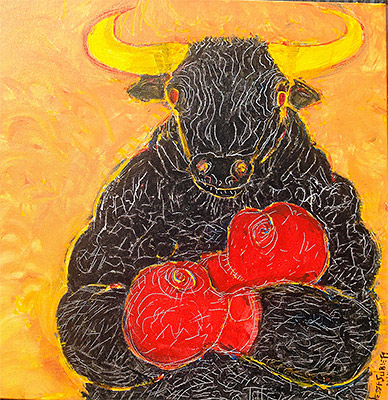
The Minotaur is Loose, by Jesse Sublett

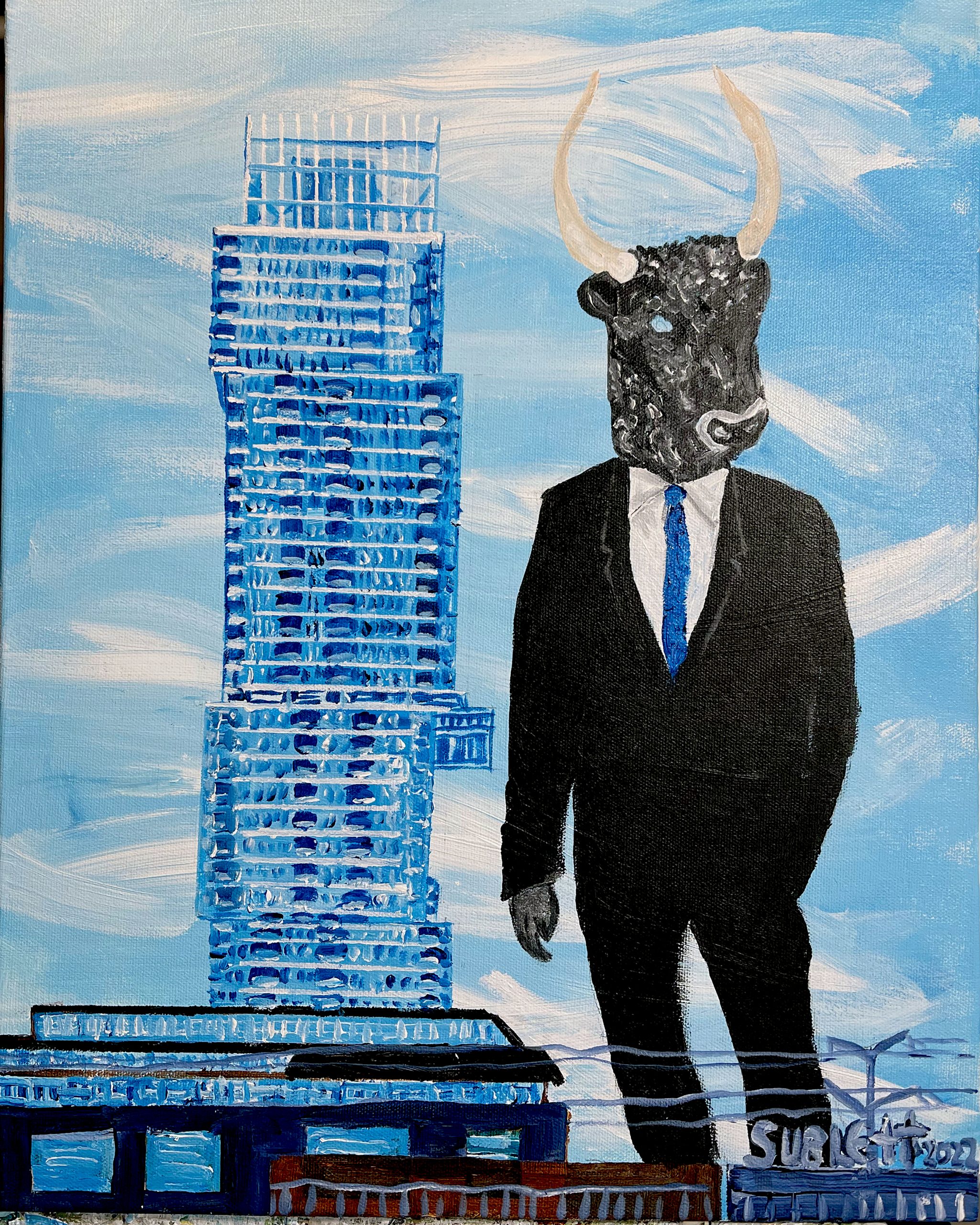
Hey, it’s May, Taurus time, which just happens to be my birthday month, so I’m posting pictures of minotaurs, a new one every day, or at least until I get burned out on the idea. The minotaur, as you may know, is a mythical creature, half bull and half man, and basically, if anything specific, he (HE, not SHE) is a symbol of out of control male energy. With that you get an extra dose or two of sex, fighting, aggression, destruction, etc. Let’s not take this idea too far, but you gotta admit, it’s kind of interesting. A recent FB friend posted on one of my Picasso minotaurs that he was “interested in the significance… so I did some research…” My reply was that minotaurs were among the most prolifically produced images of Picasso and if you know what minotaurs mean and you know anything about Picasso, you would go, “Oh… yeah… I get it…” Also as you may know, I wrote a play about a trip to West Texas, to Marathon, and it involved the minotaur story and a climactic encounter with one, but the project ended badly. So we won’t be talking about that here. Unless there’s a lawsuit. Someday I’ll turn the play I wrote into a novel. At the moment, the story is getting used, in portions, in my new pulp fiction series, temporarily titled GRAVE DIGGER BLUES.

Anyway, here are the first few minotaurs in the series, plus a little poster for the BIG, UPCOMING, SUPER COOL 4th Annual HOWLIN WOLF BIRTHDAY TRIBUTE SHOW.

Leave a Comment

Filed under JESSE'S GIGS, MY ART BLOG

A K A SERIAL KILLER

The Texas board of pardons and paroles cannot make up their minds about whether or not to release the serial rapist and serial murderer, Lyle Richard Brummett (a k a Lyle Richard, Richard Stone, etc.), who murdered my longtime girlfriend, Dianne Roberts, in 1976, and was also convicted for his role in the murders of at least two other women in Kerrville in 1975. I’ve had trouble sleeping at night for a long time now. It hasn’t helped to get conflicting letters from Texas Department of Criminal Justice (TDCJ). First they said he had been denied parole. Then they said “accepted.” Then they said he’s under “special review.”

The grim facts have weighed heavily on me for 36 years now. But on the plus side, at least I’m alive. So it’s my duty, in a way, to spread the word about this individual and his path of destruction. I’ve written about this before, in my book Never the Same Again, in great detail. I’d rather you read about it there than to have to write another word about it. You can buy the book at BookPeople in Austin, or from me or Amazon, print version or ebook. I wrote about it for New York Times Magazine in 2001 and also in Texas Monthly.
You can also read about this dread situation in today’s Austin-American Statesman which gives a short, simplified version of the story.

The basic situation now is this: The families of the victims of Brummett’s violent rampages who are on the notification list of Victims Services (a division of TDCJ) receive letters each time this convicted, confessed murderer is under consideration for parole. In 1977 he confessed and was convicted of two murders and sentenced to two life terms, concurrent. This arrangement was part of a plea bargain. Committing murder during the process of rape and other serious crimes is a capital offense. In 1976, when Brummett was apprehended, the death penalty was in the process of being reinstated in Texas. The supreme court had approved the capital punishment provisions in Texas and other states, but a few legal hurdles remained. Brummett wisely decided to confess to his crimes and confess, which helped resolve the cases in Kerrville, which had gone unsolved for almost a year’s time. Brummett implicated another individual in two of the Kerrville cases, the murders of Beth Vallance Pearson and Carol London, both teenagers.

Dianne Roberts 1974

In September 1975, Brummett was released from jail in Kerrville after being charged with the rape of one teenager there. That same day, Brummett and an accomplice took two teenage girls to a rocky pasture outside of town and murdered them. In November Brummett was charged with yet another rape in Kerrville. He moved to Austin, changed his name, got married. He was charged with several other crimes, including credit card fraud. His wife was pregnant. He was slated for a July 1976 trial in the rape indictments, but his lawyer obtained a continuance. Thus, in August 1976, he was free. Free to go out drinking with an old friend of mine. The pair came by the South Austin house I shared with Dianne Roberts, my first love, a beautiful, gentle, artistic poet named Dianne Roberts, from Houston, Texas. We met during my first few weeks in college. My friend had briefly rented a room from us. He would come by periodically to pick up some of his things, since he didn’t have a permanent place at the time. The two drinkers came by, visited with Dianne for a while, and learned that I was away playing a gig in San Antonio. Later that night, Brummett came back, broke in and murdered Dianne. The next day, August 16, 1976, I came home, excited about how well the gig had gone. I called for her, went looking for her, and found her where Brummett had discarded her body. I went into shock. Everything moved in slow motion for a long time. It was difficult even to dial the phone to call the police. When they came, the cops were pretty weirded out by our rock n roll pad, with its strange art and objects. Apparently they had me pegged for the prime suspect. Many, many hours later, after being fingerprinted and questioned, I remembered our roommate’s strange friend. I told the detectives about him and they paid him a visit.

So… like I said, I don’t want to write about this. The facts are, Brummett could well have been one of the first capital punishment cases executed after the lifting of the death penalty moratorium. His attorneys at the time convinced him that his life at least would be spared if he cooperated and confessed to the lesser charges (rape trials are always difficult, and even more difficult when the victims are dead; and in the Kerr County cases, the remains were scattered bones; Brummett also confessed to at least one other murder in Kerrville where the remains could not be located).

Listen, if you know me, you know I am mostly a happy, positive guy. I’m happily married to Lois Richwine, a strong, creative, imaginative, beautiful person. We have a great son. We have a pretty great life. So I’m not dragging this thing around the town square like the rotting corpse of some beast I killed in the forest, trying to get attention and acclamation. This is just one of those terrible things that is part of the architecture of my life. Most of that architecture is very good. Then there’s this rotten part. We just have to deal with it.

So now we wait until the May 11 meeting with the parole board. The decision on whether this individual will be let loose to walk among us and our children is up to them, apparently. It’s already very difficult to sleep. I hope they make the right decision and leave him in jail for at least a couple more decades.

What you can do. Contact Victim Services. Send a fax (512/452-0825) or email them. Here is the email address: victim.svc@tdcj.state.tx.us and use the subject line: URGENT PAROLE PROTEST. Put this identifier at the top of your message: Lyle Brummett TDCJ ID: 00267843. It is VERY IMPORTANT that you include his TDCJ ID, so just do it. If you want to copy and paste the background info below, do so. But make sure you state your opinion clearly by saying “Please DO NOT release Lyle Brummett.” If you are a relative or friend of one of the victims, it helps to describe the ongoing loss to the family and community, the awful damage done by this individual’s crimes, and the ongoing threat to the community if he is released.

Background: On August 16, 1976 Lyle Brummett broke into the home of Dianne Roberts, and raped and strangled her. It should have been a death penalty case, but there was no death penalty at the time. When arrested in 1976 he quickly confessed to his role in the rape and murder of two Kerrville girls a year earlier. Brummett confessed on the night of September 17, 1975, he and his accomplice picked up two girls in downtown Kerrville, Carol Ann London (18) and Elizabeth Pearson (15). The girls had car trouble. Brummett and his accomplice drove both girls to a deserted pasture a few miles outside of Kerrville and raped and murdered them. They strangled the girls, and then bashed their heads with rocks and sticks. They drove a short way down I-10 and ditched the girl’s clothes and underwear, which were found a few days later. On the day of the murder, Brummett had just been released on bail from Kerr County jail on a rape charge committed September 2nd, and then on November 16th he raped another girl in Kerrville. Brummett was arrested on another unrelated rape and murder of another young woman in Austin.

Brummett pled guilty and was given two life sentences, to be served concurrently.

That’s it.

4 Comments

Filed under NOIR & TRUE CRIME

ROMNEY ROBOT’S NEW IDEA

The Martyrdom of Ann Romney, a k a, the Robot Brain of the Mitt Romney Machine, has a NEW IDEA: OBAMA'S WAR ON MOMS! Be afraid, be VERY afraid. My name is Roger Corman and I approve this ad.

Read the background in Salon.

NEXT UP, OBAMA WANTS TO TAKE AWAY YOUR GUNS!!!

Say hello to my little billionaire arms industry supporting friends


(even though he’s never made any suggestion whatsoever that gun control laws should be strengthened or expanded; the NRA KNOWS THESE THINGS because they implanted secret microchip monitoring device in Obama’s brain when he was an infant in Kenya. Yes, they knew he would grow up to be president of the US. It was written in the Bible. No, not that bible, the Shooter’s Bible.

Read more via NPR. Romney spoke under a banner reading “NRA Celebrates America.” You’d think they’d time this to coincide with the JFK assassination, or Columbine, or the Tower Massacre, or something.

My name is Tony Montana and I approve this ad, mang.

ROCK CRITIC MURDERS, the only-in-Austin crime novel, enhanced for your iPad, with over 30 minutes of rocking Austin music, plus videos & other media, only $3.99. Download on iTunes.

Leave a Comment

Filed under politics

It’s a rotten little world & I got trouble in mind

Use the music player, bottom left, and you can read the post while listening to “NOBODY KNOWS THE TROUBLE I’VE SEEN

"Stop makin' noises like a husband." Ann Savage to Tom Neal (Detour 1947)

"What I like about you is you're rock bottom. I wouldn't expect you to understand this, but it's a great comfort for a girl to know she couldn't possibly sink any lower." Jane Greer to Robert Mitchum in The Big Steal (1949)

Robert Mitchum to Jane Greer (again): "You built my gallows high, baby." (Out of the Past 1947, directed by Jacques Tourneur)

"Isn't this beating likely to be fatal?" "Not unless we want it to be." (The Glass Key 1942, adapted from the novel by Dashiell Hammett))

Dark Passage (1947), Lauren Bacall & Humphrey Bogart

FROM “DARK PASSAGE,” novel by David Goodis, screenplay by Delmer Daves:

George Fellsinger: Gert didn’t hate you. Gert just didn’t care for you. There’s a difference. She would have walked out on you if she’d have found somebody permanent. She wouldn’t frame you when she was dying. She was no prize package, but she wouldn’t frame you. Madge framed you. Madge wanted to hook you, and when she found she couldn’t have you, she framed you, sent you up for life. We both know that.
Vincent Parry: My attorney couldn’t shake her story. Maybe someday she’ll get run over or something.


AND… in case you have any doubts about David Goodis’ talent for writing great stuff:

Cabby: Where do you want to go to?
Vincent Parry: Might as well make it the police station.
Cabby: Don’t be like that. You’re doing alright. You’re doing fine.
Vincent Parry: If it was easy for you to spot me, it’d be easy for others.
Cabby: That’s where you’re wrong. Unless you’d be happier back in Quentin.
Vincent Parry: Yeah… yeah, sure. That’s why they sent us up there. To make us happy.


They don’t make ‘em like Asphalt Jungle anymore. Novel by W.R. Burnett, directed by John Huston, fantastic cast, including Sterling Hayden and Marilyn Monroe, many others. One of my favorite films noir, and it would still be so even without this great scene with Marilyn Monroe:Big Banana Head

"You big banana head."

I’ve got lots of favorite films noir and hardboiled crime novels, too many to mention… but when it comes to great dialogue, it’s really hard to beat “Asphalt Jungle.” Here are a few of my favorite lines:

Doc Riedenschneider

▪ Experience has taught me never to trust a policeman. Just when you think one’s all right, he turns legit.
▪One way or another, we all work for our vice.
▪They’ll be paid off like house painters – they’ll be told nothing about the size of the take. Sometimes, men get greedy.
▪I haven’t carried a gun since my twenties. You carry a gun, you shoot a policeman. Bad rap, hard to beat. You don’t carry a gun, you give up when they hold one on you.

Dr. Swanson: He hasn’t got enough blood left in him to keep a chicken alive.

Cobby: Here’s to the drink habit. It’s the only one I got that don’t get me into trouble.

Cobby: How can things go so wrong? How is it possible? One man killed, two others plugged. I’m out thirty grand. We got a load of rocks we can’t even peddle…I must be awful stupid. Here I am with a good business, money rolling in, I-I gotta get mixed up in a thing like this. I ought to have my head examined.

Louis Ciavelli: If you want fresh air, don’t look for it in this town.

Angela Phinlay: Haven’t you bothered me enough, you big banana-head? Just try breaking my door and Mr. Emmerich will throw you out of the house!

Alonzo Emmerich: Oh, there’s nothing so different about them. After all, crime is only… a left-handed form of human endeavor.

Truck Driver: [referring to stray cats] I run over one every time I get a chance. Some people feedin’ cats and some kids haven’t got enough to eat.
Gus: [Tosses the customer out by his coat-tails] If I ever see you runnin’ over a cat, I’ll kick your teeth out.

Then we have the final act of the film, when Dix and his gal, Doll, last members of the heist team at large, get in the car and leave town on a desperate trip to nowhere. It’s surreal, lyrical, hardboiled, transcendent.

Dix: I was up on that colt’s back. My father and grandfather were there, watching the fun. That colt was buck-jumpin’ and pitchin’ and once he tried to scrape me off against the fence, but I stayed with him, you bet. And then I heard my granddaddy say, ‘He’s a real Handley, that boy, a real Handley.’ And I felt proud as you please.
Doll: Did that really happen, Dix, well, when you were a kid?
Dix: Not exactly. The black colt pitched me into a fence on the first buck and my old man come over and prodded me with his boot and said, ‘Maybe that’ll teach ya not to brag about how good you are on a horse’…One of my ancestors imported the first Irish thoroughbred into our county…Why our farm was in the family for generations, one hundred sixty acres – thirty in bluegrass and the rest in crops. A fine barn and seven brood mares…And then everything happened at once. My old man died and we lost our corn crop. That black colt I was telling you about, he broke his leg and had to be shot. That was a rotten year. I’ll never forget the day we left. Me and my brother swore we’d buy Hickory Wood Farm back some day…Twelve grand would have swung it, and I almost made it once. I had more than five thousand dollars in my pocket and Pampoon was runnin’ in the Suburban. I figured he couldn’t lose. I put it all on his nose. He lost by a nose…The way I figure, my luck’s just gotta turn. One of these days, I’ll make a real killin’ and then I’m gonna head for home. First thing I do when I get there is take a bath in the creek, and get this city dirt off me.

Finally, we have the basic lingo of the set-up for the caper. It’s poetry, man.

Doc: What boxes have you opened?
Louis: Cannonball, double-door, even a few Firechests, all of ‘em.
Doc: Can you open a vault with a time-lock and a re-locking device?
Louis: Sure.
Doc: What do you use? Lock or seam?
Louis: Seam…
Doc: How good are you as a pick-lock?
Louis: I can open anything in four minutes.

And nobody lives happily ever after. See you in black & white, daddy-o.


Leave a Comment

Filed under NOIR & TRUE CRIME

STEAL THIS BLOG: RICHARD STARK, KING OF THE NOIR CAPER

“A certain ruthlessness and a sense of alienation from society is as essential to creative writing as it is to armed robbery,” said novelist Nelson Algren, who hit the nail on the head many times, including his brilliantly dark novel Man With The Golden Arm, but for my money, nobody embodied this lead slug of wisdom better than Donald Westlake, writing under the pseudonym Richard Stark. Beginning with The Hunter (later issued as Point Blank, the movie-tie in edition), in the early 1960s, Westlake/Stark published several dozen of the best crime caper novels ever written. Most, but not all, starred the one-name professional thief, Parker, an amoral anti-hero embodied to perfection by Lee Marvin in the John Boorman-directed classic surrealistic noir Point Blank. Before we go much further, here’s a bit of irony: Although Parker was as unsentimental as they come, he was a truly charismatic anti-hero, and his creator, Don Westlake, was a truly nice guy. A couple of excuses for this blog: One, I wanted to reprise my interview with the late great author from a few years ago; two, I’ve become really addicted to the Darwin Cooke graphic novel adaptations of the Parker series (check out the preview of The Hunter) and three: a few months ago, a remake of The Hunter/Point Blank was in the works, and although the advance press sounded great, I haven’t seen anything about it lately, so I don’t know what’s up with that. A friend of mine was involved in the production, but he’s since disbanded his company, and I haven’t had time to ask him about it. One final thing, a recent post on the crimefictionlover page had this story about what is apparently the last new book from Westlake, and you can read about that here.

There are lots of other blogs and pages out there about the Richard Stark novels and the movie adaptations. Any idiot can Google them. One of my favorites is The Violent World of Parker.

Later, I’ll probably post the covers from my collection of paperback originals and first edition hard covers of the Parker novels, even though you can probably find them elsewhere. Suffice to say, I think these stories are perfection. Like a Picasso painting, or a Citroen, or a Fender Precision Bass guitar. Art and life and tools of the trade just don’t get any better. Richard Stark and Donald Westlake and Parker, you son of bitch, we miss you.

Here’s the interview, which originally ran in the Austin Chronicle in 1997, to celebrate the return of Parker in Comeback.

No Prozac for the Wicked
The Cool Capers of Donald Westlake
BY JESSE SUBLETT, FRI., DEC. 26, 1997

Like God and the Devil, – - writer Donald E. Westlake has many names and sometimes seems to be everywhere all at once. In the field of crime literature, Westlake has few peers, a legion of admirers, and innumerable imitators. Since the 1960 publication of his smash debut The Mercenaries, he’s written more than 70 novels (40-something under his own name and dozens more under a gaggle of pseudonyms), including two of the best crime fiction series ever written, and dozens of one-shot genre-twisting classics. His film credits include at least two movies that many writers would kill to have on their resumé. Westlake’s screenplay for The Grifters, adapted from the Jim Thompson novel, won a well-deserved Academy Award in 1990. It was also widely acknowledged as being the first completely successful translation of Thompson’s incredibly dark and tortured visions into the language of film.
True aficionados of hard-boiled fiction and cinema were the least surprised by Westlake’s deft handling of Thompson’s stark, hellish world view. After all, Stark was practically Donald Westlake’s middle name. More precisely, Richard Stark was the pen name under which he wrote 20 hard-boiled classics between 1962 and 1974, the first of which, The Hunter, was made into a killer film noir in 1967 called Point Blank! With a stellar cast led by the inimitable Lee Marvin, director John Boorman transformed Westlake’s original caper/revenge tale into a unique, stunning, and sometimes psychedelic celluloid trip that blew the genre to smithereens and, in the process, redeemed it from anachronistic irrelevance. (Should be required viewing for wannabe noir filmmakers weaned on Tarantino and MTV.) So far, six of the Stark novels have made it to film, a pretty fair number when you consider their dark, amoralistic tone. They’re the best caper novels ever written, with lean and mean prose and chapters that flash back and forward to drive a narrative that zips along at whiplash speed despite the infinite convolutions of the heists, take-downs, betrayals, and general mayhem of the plot.
Parker reacted at once, almost without thinking. The lights flashed on, he spun and saw them, he heard the engine turning over, and he raised the shotgun and fired. The right barrel. The left barrel. The lights went out. — The Black Ice Score
Sixteen of the Stark novels feature a protagonist named Parker (no first name), a professional crook who never gets caught. A cold, almost mechanical anti-hero, Parker has an ironclad set of rules for success in crime:

* Never have sex when working a caper. (Before and after is a different story.)
* During a takeover job, learn and use the first names of the people you’re holding at gunpoint. It boosts their ego and makes them easier to deal with.
* When a caper goes sour and a partner gets in trouble, it’s their tough luck. The professional crook sticks his neck out for no one.

At large since his first appearance in 1962, Parker is cold as an iceberg, sure as lightning. No marine was ever as professional or dedicated to his craft. Despite all that, no caper ever goes off without a hitch. Military precision devolves into carnage and chaos, but Parker always comes out on top. None of the conflict and suspense ever has anything to do with whether the crooks’ behavior is right or wrong. The concept of amorality is almost as irrelevant as it would be discussing the behavior of animals. They’re just doing the thing they do. And after the gig, Parker sleeps just fine. No Prozac for the wicked.

Hearing the click behind him, Parker threw his glass straight back over his right shoulder, and dove off the chair to the left. The bullet furrowed a line through the plans on the table, the sound of the shot echoed loud and long in the closed room, and Parker rolled amid suddenly scrambling feet, his arms folded in tight over his chest. He didn’t have a gun on him, and the first thing to do was get away from the guy who did. — Plunder Squad

In 1974, Westlake stopped writing about Parker. He’d already written four other novels as Richard Stark, but these featured one of Parker’s sometime partners, a part-time actor named Grofield who supplements his stage income with crime capers. The Grofield books were good. Grofield was not Parker. Westlake tried to write another Parker novel, but “Parker just wasn’t alive for me,” he says. That’s not to say that Westlake suffered from writers’ block. He kept up his usual prodigious output, under numerous pen names (Samuel Holt, Tucker Coe, Morgan J. Cunningham, Curt Clark, and Timothy J. Culver, to name a few), but his most significant work was published under his own name, and most of it was, believe it or not, comic. The Hot Rock, published in 1970, introduced a new series character named Dortmunder. Like Parker, Dortmunder is a bent twig who thinks big. Unlike Parker, Dortmunder is a wannabe, a bungler. He never gets away with it. The Hot Rock was filmed as a light-hearted Robert Redford movie. The follow-up, The Bank Shot, also made the transition to film, though not as successfully.
The bulk of Westlake’s work in the past two and a half decades proved that he’s just as good at being soft-boiled and biting and satirical as he is at being tough and dark and suspenseful. But was it really a detour or merely a shifting of gears? In some of Westlake’s most successful crime novels (the Parker series in particular), he had already pushed the envelope just about as far as it could be pushed. Push it a little farther, the envelope turns inside out, and the payoff for a suspenseful setup isn’t a sock in the jaw or an exploding bank vault but a tickled funny bone. Sometimes it’s just a matter of attenuation, of tweaking the reader or viewer’s expectations. Notice, for example, how much humor there is in Hitchcock’s films. Try watching noir classics like The Big Sleep, Out of the Past, The Glass Key, The Maltese Falcon, or The Postman Always Rings Twice and think of them as comedies. It’s easy once you’ve seen them a couple of times. You can only watch a guy blindly following a suicide blonde into a rain-slick dark alley or falling out of her bed and into the gas chamber a few times before you start thinking, Hey, he shoulda known better. Notice how most of the best tough-guy lines are the ones that get laughs. The line between noir suspense and dark comedy is a fine one. Or as Westlake says, “It’s the other side of the same street.” And Westlake knows both sides like the back of his hand.
Channeling Hitchcock is easy while reading The Ax (Mysterious Press, $23). Published to rave reviews last June, The Ax details the predicament of one Burk Devore, a middle-class, middle-aged executive who is “downsized” out of his job as a specialist at a paper company. After being unemployed for two years, Burk decides that he will be a victim no more. Taking out a phony employment ad in order to attract all the top men in his field, he collects the resumés of the six men more qualified than he for the next job opening in his special field. Then he murders them. It’s all quite logical. He has to do it. Otherwise he’ll lose his wife, his two kids, his home with a two-car garage (already absent the second car), his minivan. Film rights are already being negotiated. If Michael Douglas hadn’t already done Falling Down, I’d expect him to kill for the part. The Ax is truly a fable for our times, a hell of a book that should make a hell of a movie, too. Expect to see more and more Westlake film credits in the future. Like a flashback-driven plot, the resurgence of film noir seems to be cycling back to the scene of Westlake’s brand of crime. Filmmakers turning out movies like The Usual Suspects and, more recently, L.A. Confidential and U-Turn, not only emulate the noir style but employ high-octane narratives to prove just how entertaining men behaving very badly can be.
Not-so-coincidentally, Brian Helgeland, co-screenwriter of L.A. Confidential (adapted from the work of another great crime novelist, James Ellroy), will be writing and directing a remake of Point Blank!, starring Mel Gibson. Can Mel do Parker? Can Helgeland handle a hard-boiled heist? Devoted crime fiction aficionados will be sweating bullets.(Note from Jesse: OK, so that one didn’t turn out so well… Maybe let the French tackle the job next time)

And the crime wave rolls on, in print as well as film. Here the big news is that Richard Stark is back, with a new novel called, appropriately enough, Comeback (Mysterious Press $18). This time, Parker’s crew robs $400,000 in “love offerings” from the stadium revival meeting of big time evangelist William Archibald’s Christian Crusade. Everything goes off without a hitch — almost. Parker’s inside man, one of Archibald’s “angels,” starts to have second thoughts in the middle of the heist. Too bad for him.
Parker reached out and closed his left hand around Carmody’s right thumb, bending the thumb in on itself, applying only the slightest pressure. Carmody’s face turned almost as white as the makeup smeared on it, his knees bent, his mouth opened in a wide O. Parker said, “Shut up, now. You said your say. Now we walk to the money room.”
Next year, Parker will strike again with a new novel, Backflash, and in the fall, Mysterious Press will begin reprinting the entire series of Stark novels. A very welcome comeback. A timely one, too: Westlake’s fabulous creation is the original Material Man, the ultimate Just Do It guy. Show me the money? Gimme a break. When Parker says it, you know exactly what he means. And what’s more, he’s the pop culture anti-hero who anticipated the craze of one-name celebrities by 20 years.
The creator of Parker is a guy who writes books faster than most people read. A very focused, very busy man, you’d think. Although, like most people who have a lot of aliases in their closet, there are some things he’d rather not discuss; he’s an open, easygoing, entertaining guy to talk with. During our interview, he even laughed at all my jokes. But then again, he seems to be a guy who laughs easily. You could say that Donald Westlake is a guy who laughs all the way to the bank robbery.

AC: Was Mercenaries (1960) indeed your very first published book?
DW: Yeah, well, under my name. There was a bit of juvenilia before that but that’s the first one I acknowledge.
AC: And what about the dozens of other books written under various pen names that you haven’t acknowledged? Some of those are pretty wild and very sought-after by collectors. Anything in particular you’d like to say about any of those?
DW: Uh, no. (laughs)
AC: How did you start out writing the two series characters, Parker and Dortmunder?
DW: They were both supposed to be one-shots. I wrote the first Parker book, thinking it was for Gold Medal, the great paperback original house, but they rejected it, so my agent sent it to Pocket Books. There was an editor there named Bucklyn Moon, a wonderful man. He called me, and we discussed the fact that I had Parker get caught at the end. I thought bad guys had to get caught at the end. He asked me if there was any way I could let Parker get away and do more books about him. I said, “Oh yeah.” So that was completely inadvertent.
And so with Dortmunder I just did The Hot Rock and didn’t expect to see him again. Then two years later I was driving back and forth between New York and New Jersey every week and there was a bank being torn down and a new bank being built next door, and they were operating out of a mobile home next door while the construction was going on. I finally drove by one time and I said wait a minute, there’s wheels on that thing, somebody could just pull up and drive that bank away, and I think I got the perfect people to do it. And so that’s how Dortmunder came back, in The Bank Shot. But it was all inadvertent. I just get up every morning and scratch my head.
AC: Everybody says your books have this amoral center. Do you have an attitude or philosophy that explains that?
DW: It just seems to be natural. It’s not that I am specifically myself anti-authority but it’s just that I think I just basically have a distrust of people who say, “I’m in charge here.” I remember years ago I was walking on the beach and there was a guy walking towards me and he was wearing a
T-shirt that said, “Question Authority,” and my immediate reaction was, “Who says?”
AC: It’s interesting that writers like you and Hammett and Robert B. Parker are able to balance humor and darkness while writing in the hard-boiled style. Then you’ve pushed it all the way over to the other side for the Dortmunder series. Was Dortmunder specifically intended as a satirical take on Parker?
DW: Actually Dortmunder came out of a failed effort to do Parker. I had an idea for a novel in which Parker would have to steal something over and over and that turned out to be too comic of an idea that you just couldn’t give it to Parker. The character would lose credibility as a tough guy if you gave him that story, and that’s why I wound up with Dortmunder. But it’s just the other side of the same street.
AC: I see a lot of Hammett in your style. Do you like his Bloodmoney?
DW: Oh, yeah, yeah, yes. Hammett is one of the people I wanted to write like because he was laconic. He didn’t waste words. He didn’t make a big deal about emotions. But he made them very plain. You knew the emotions were there without him having to tell you a whole lot. I liked that a lot in him, so that was the stylistic thing I liked, not the kind of stories he was doing but the way he was telling them.
AC: Before Comeback arrived I was wondering how you were going to handle the time and age issue. Now that I’ve read it, I know. Here we are, 23 years after his last caper and he seems as spry as ever, but I feel a lot older.
DW: I figured that if Dick Tracy could go on without ever aging then Parker could too. I mean, if the cops can do it, then why not a robber? Dortmunder hasn’t aged in 27 years. They live in a sort of perpetual Now. Like in one book they don’t know about fax machines, and in another book they do, and things like that.
AC: How about Point Blank! Is that a great movie or what?
DW: Oh, yeah, that’s a terrific movie.
AC: What’s your interpretation of the ending? Is he supposed to be dead or is he really, literally, hiding in the shadows?
DW: Well, nobody who made the movie has ever been prepared to talk about what the ending means. One interpretation is that in the opening sequence, when he’s lying on the floor in the cell, he’s about to die and the entire movie is his dying dream sequence. Now that’s a little artsy-fartsy.
AC: You think so? I’ve always kind of liked that interpretation. But it doesn’t matter to me either way, doesn’t detract from the movie.
DW: Yeah, it’s better to leave it alone, which is why I’m glad that the people who made it never talked about it.
AC: Let’s talk about the remake.
DW: I don’t know too much about it. They never came to us, we went to them. My agent read in Daily Variety that they were going to do a movie called Parker. We got in touch with them and said, well, there are lots of things you can do but you can’t do a movie called Parker because you don’t own the name.
AC: Oh, is that why the Parker character is always named something besides Parker? How did that get started?
DW: Because Lee Marvin wouldn’t do sequels. He just refused to do sequels. So you don’t use up the name on a guy who’s never gonna do another one. The second time, The Split, Jim Brown played the lead, and he wasn’t gonna do a whole bunch of them either, so again, we said you can’t use the name. And then it sort of became a habit. They own the remake rights but they don’t own the name. We tried to work out a deal, because Brian Helgeland really wanted to use the name, and we tried to work out something that would be fair for everybody but it just wasn’t possible, so I don’t know what they’re calling him, but…
AC: Spenser?
DW: Huh? What?
AC: That’s a joke. You know, like Robert B. Parker’s Spenser.
DW: Oh, yeah, that’s a good one. I think that at one point they were saying that if they couldn’t call him Parker they’d call him Hunter, since the book was called The Hunter, and the movie is now called Payback.
AC: Do you do anything differently when you’re working as Richard Stark? Put on a different pair of shoes, or stick a gun in your pocket, maybe?
DW: No, no. I look at what I did yesterday to get back into that head. The personas and all that are waiting for me in my office. I don’t carry them around.
AC: Let’s talk about The Ax. Have you had any interesting feedback from people who’ve been in that position?
DW: Yeah. One letter, the guy said, “Now that I’ve read your book I’m surprised that murder never occurred to me in those 18 months.” And there’s a guy from the New York Post, a reporter, who told me he thought that The Ax is terrific, but he didn’t finish it. He was out of work a couple of years, and he said, “That feeling of helplessness and rage and sadness is what you live with until you get back and your book is full of it and I couldn’t stand it.”
AC: So you’re gonna have that on your conscience now.
DW: Well, the problem is that the natural audience for that book can’t afford hardcovers.
AC: Why and how did Stark come back?
DW: I tried three or four times over the years, from ’73 up to maybe 1980. Then in 1988 I started to do the screenplay for The Grifters and the Writers Guild went on strike. I was writing a Dortmunder novel, Drowned Hopes, and when I finished it the strike was still going on, and I had a little idea for what might have been a Parker novel and I started it then. But then the strike ended and I did The Grifters. So then a year later I went back and looked at those two chapters and I thought, geez, maybe I can, and I did half a book and then it just stopped. Then about a year and a half ago, I finished something, I forget what, and I said to my wife, usually I know what I’m gonna do next, usually by the time I finish a book I’ve got an idea for something, or I’ve been hired to write a screenplay or something, but I don’t know what I’m gonna do next and it feels weird. She said why not take a look at that Richard Stark book you never finished. I went back and looked at the first half that existed I said, I see the next three chapters. And it just flowed and it went so easily then that I’ve done another one since. He’d gone away and then he’d come back. There’s no telling why. Maybe it was me or something in the world around me…
AC: Maybe it was hanging out with those grifters.
DW: Yeah, that could be it.
AC: Did you experience any weird feelings slipping inside Jim Thompson’s head when you wrote The Grifters?
DW: Yeah, I’ve been on both sides of this, I’ve been the novelist who somebody else adapts and I’ve been the adapter who adapts someone else’s novel, so I’ve been both sides. My feeling is that the screenwriter’s job is to get the original writer’s feeling across, what it was that he was doing when he was putting it on paper. His world view, his attitudes, his approach, what he was trying to accomplish. You’re not gonna get the specifics, you might get some of the dialogue, you may get some of the scenes, but it’s a different field. Now, Thompson is the most nihilistic writer America has ever produced. As somebody says, every one of his novels ends when his characters go to hell. I mean, they just go to hell. The people who put The Grifters together were just wonderful, including the production designer, Dennis Gassner. He and Stephen Frears got together and they decided that in the early part of the movie there would be no red, to the extent that there’s an early sequence outside in Los Angeles between John Cusack and a cop and in the background behind them it’s like two blocks worth of parking lots. And somebody noticed there was a red car a block and a half away. So they ran down there with a car cover and covered it. Because they wanted to gradually introduce red until when you get to the end of the movie, when Anjelica Huston gets into the elevator and goes down, she’s in bright, bright red, in an amazing amount of white light on her, in a black box. She’s in red-red-red, and Stephen said that is the descent into hell.
So we tried to do in our way what Thompson was doing in his way. The thing was, Thompson had to write too fast for too little money; he knew he was better than that. And there was nothing he could do about it but just keep slogging ahead and you can see in his books, particularly if you do like I did and you’re trying to get the parts right. You see, well, oh he should have introduced this back on page 30 but it didn’t occur to him until he got to page 50, and he was damned if he was gonna retype page 30, so he’ll introduce it on page 50. But I can take it and put it back in the story where it belongs. So I said what I’m doing is giving Jim Thompson the second draft he never got to do for himself.
AC: That’s great. I’ve argued with people who carp about what they see as technical faults in his writing, and I say that they’re missing the point. A Thompson book is an experiential thing. You can’t judge his work by conventional standards.
DW: Yeah. He was very talented and very driven and so that sense of a guy who has a story to tell about everybody going to hell and has to do it in commercial enough terms so he can pay the rent and he’s like he’s got a following wind, and he’s being driven forward at top speed and doing the best he can with it. It’s sort of exciting and scary to go along with it. It was very interesting, very interesting to do.
And there was a premiere in Los Angeles and a party afterward and Thompson’s widow and daughters and they’re all tall, they’re all like six feet tall, and they all looked like Anjelica in the movie! I was saying oh my God, oh Jesus!
AC: I know what you mean, I met some of the family at a book party in Westwood a few years ago. Let’s come back to my favorite anti-hero for a minute. What are some things Parker would NOT do?
DW: I spoiled a book by having him do something he wouldn’t do. The sixth book in the series is called The Jugger, and that book is one of the worst failures I’ve ever had. The problem with it is, in the beginning of the book this guy calls him and says “I’m in trouble out here and these guys are leaning on me and I need help,” and Parker goes to help him. I mean, he wouldn’t do that, and in fact, the guy wouldn’t even think to call him! (laughs)
AC: But in Comeback, Parker convinces Ed and Brenda to come pick him up when he’s on the run.
DW: Yeah, and they discuss it and Ed Mackey says, Well, he wouldn’t do that for me, and Brenda says, No he wouldn’t, but he expects you to, and you will.
AC:I noticed you’ve got some stronger female roles in Comeback than in previous Parker novels.
DW: Well, you’re always writing in the time you’re writing in, and women –
AC: Are stronger these days.
DW: Yeah, and they take a more active part in stories. I’ve seen the script for the remake of Point Blank!, and again, the women are stronger, because it’s just natural. That’s the reality.
AC: I like tough women in stories.
DW: Yeah, these days, any time I have dealings with a tough lawyer, it’s always a woman. Used to be, it was always a man, it was always this sort of a bony older man, and now it’s a bony, younger woman.
AC: Are you familiar with Paddy Mitchell, the professional bank robber?
DW: No, I don’t think I’ve heard of him.
AC: There’s a nice long story on him in GQ, the fall fashion special with Sean Penn on the cover. Until recently, Paddy was a very successful professional bank robber. And, like Parker, he had plastic surgery to hide his identity, and instead of now saying he’s sorry for his crimes and must have been under some evil influence or something, he says, No way, I was having the time of my life!
DW: There’s a guy named Al Nussbaum, last time I had any contact with him he was in San Francisco, and I’m not sure if he’s now alive or dead. He was in San Quentin for the rest of his life for bank robbery because his partner killed a guard during the robbery, and therefore he was also guilty of murder one. He became a writer while he was in jail. He was very bright and very funny, and he says, “I didn’t reform, I lost my nerve. I still think it’s sensible to want money and if you want money it has to be sensible to go where they have it and make them give you some.”
AC: When you first started out, did you have any inkling where your writing career was going to lead?
DW: (laughs) None, absolutely none. I used to make predictions and I was always wrong. Every time I used to say, “This is what I’m gonna do next,” I was always wrong, so I stopped saying what I was going to do next. I just get up every morning and scratch my head.

Leave a Comment

Filed under NOIR & TRUE CRIME